Sunday, September 11, 2016

Choucoune * Ti Zwezo * Yellow Bird

Desandann
Choukoun - Ti Zwezo


The group Desandann did not sing all the lyrics, they just song one verse and one version of the chorus, however they did a MARVELOUS job.
 - aidnul


♥ ♥  ♥ ♥
♥ ♥  ♥ ♥
Choukoun - Ti Zwezo         Little Bird
Chorus
Ti zwazo nan bwa ki t'ape koute Litte bird in the woods 
Ti zwezo nan bwa ki t'ape koute that was listening
Le mwen sonje sa When I remembered that
Mwen genyen lapenn I had sorrow
Ka depi jou sa Because since that day
De pye mwen nan chenn Both my feet were chained
Verse
Choukoun se yon marabou Choukoun is a beautiful woman
Je li klere kou chandèl Her eyes shine like candles
Li genyen tete debou She has perky breasts
A si Choukoun te fidèl Ah, only if Choukoun was faithful
Nou rete koze lontan We stayed and talked for a long time

The track by Desandann is available on Amazon if you want to buy it.

Choucoune
(Créole haïtien: Choukoun) est une chanson haïtienne du XIXe siècle composée par Michel Mauléart Monton sur un poème de Oswald Durand.

« Choucoune » (1883), poème lyrique louant la beauté d'une haïtienne de ce nom est une des œuvres les plus célèbres de Oswald Durand.
Michel Mauleart Monton - pianiste américain né d'un père haïtien et d'une mère américaine - composa la musique pour ce poème en 1893, s'appropriant quelques fragments français et des Caraïbes pour créer la mélodie.
La Choucoune fut créée à Port-au-Prince le 14 mai 1893.
La chanson est devenue une lente méringue (mereng), populaire en Haïti et a été abondamment mise en valeur pendant les célébrations du bicentenaire de Port-au-Prince en 1949.


Versions
La version en anglais de « Choucoune » (Yellow Bird) est d'abord parue sur l'album Calypso Holiday 1957 par la chorale de Norman Luboff (en).
Celui-ci avait arrangé la chanson dans le style calypso qui était devenu populaire dans le monde anglophone au milieu des années 1950.

Les paroles de "Yellow Bird" par Alan et Marilyn Bergman n'ont aucun lien avec le récit du poème de Oswald Durand si ce n'est que ce poème comportant les mots « ti zwazo » (petits oiseaux) dans son refrain, la chanson originale haïtienne est parfois appelée « Ti Zwazo » ou « Ti Zwezo ».


"Choucoune" (Haitian Creole: Choukoun) is a 19th century Haitian song composed by Michel Mauleart Monton with lyrics from a poem by Oswald Durand. It was rewritten with English lyrics in the 20th century as "Yellow Bird."

Choucoune
One of Oswald Durand's most famous works is the 1883 "Choucoune," a lyrical poem praising the beauty of a Haitian woman of that nickname. Michel Mauleart Monton, an American-born pianist with a Haitian father and an American mother, composed music for the poem in 1893 appropriating some French and Caribbean fragments to create his tune; the musical piece "Choucoune" was first performed in Port-au-Prince on 14 May 14 1893. The song became a popular slow méringue (mereng) song in Haiti and was prominently showcased during the bicentennial celebrations of Port-au-Prince in 1949.
 https://68.media.tumblr.com/bf80e29e172b4e2d77c7e3d67cbc8326/tumblr_odhpidCvWw1uoh1aio5_250.gifhttps://68.media.tumblr.com/bf80e29e172b4e2d77c7e3d67cbc8326/tumblr_odhpidCvWw1uoh1aio5_250.gifhttps://68.media.tumblr.com/bf80e29e172b4e2d77c7e3d67cbc8326/tumblr_odhpidCvWw1uoh1aio5_250.gif
Versions
Yellow Bird
The English rendering of "Choucoune": "Yellow Bird", first appeared on the album Calypso Holiday, a 1957 release by the Norman Luboff Choir, Norman Luboff having arranged the song in the calypso style which had become popular in the English speaking world in the mid-1950s. 

The lyrics for "Yellow Bird" by Alan and Marilyn Bergman have no connection with the narrative of the Durand poem other than that poem featuring the words "ti zwazo" (little birds) in its refrain on which account the original Haitian song is sometimes called "Ti Zwazo" or "Ti Zwezo". 
Yellow Bird -Lyrics
The song became a minor hit at #70 on the Billboard Hot 100 for the Mills Brothers in 1959; its most successful incarnation came in the summer of 1961 when the Arthur Lyman Group reached #4 with their Hawaiian flavored instrumental version which bested a rival instrumental single release by Lawrence Welk (#61).

"Yellow Bird" has also been recorded by Keely Smith, Roger Whitaker, Roger Williams, and Paul Clayton. The song continues to be popularly associated with calypso and the Caribbean and is often performed by steelpan bands but some versions, such as Chris Isaak's from Baja Sessions, evidence a Hawaiian flavor.


Chris Isaak - Yellow Bird

https://68.media.tumblr.com/6e7b03e2184d4aa705b3730e512f25b6/tumblr_odhpidCvWw1uoh1aio2_400.gif
"Yellow Bird" was sung by Vivian Vance on a two-part Here's Lucy episode, "Lucy Goes Hawaiian," which aired February 15 and Feb. 22, 1971. Vance sang it in a high falsetto, with a calypso beat, dressed in yellow and sprouting feathers like a canary (including a long tail feather) perched on a swing decorated as a nest, that lowered her in the beginning of the song and lifted her at the end. A long spoken-word mid-section features Vance riffing on the types of male birds she'd like to hook up with. 

Vivian Vance - Yellow Bird


The 23 October 1989 broadcast of the CBS TV series Murphy Brown entitled "Miles Big Adventure" ends with guest star Yeardley Smith serenading her unwilling object of desire Miles Silverberg with a snippet of "Yellow Bird".


Issa El Saieh - Choucoune


https://67.media.tumblr.com/da3c3c5906681e4c6c816a0388dfed5f/tumblr_odhpidCvWw1uoh1aio3_1280.gif


Thursday, September 8, 2016

Carlton Rara - Choukoun

Carlton Rara
Raw Sides Tour
https://68.media.tumblr.com/bbfed4d98e81f0af6d2b1298f9e31b63/tumblr_inline_odcdsw05il1sfb6gb_540.jpg
Carlton Rara, né le à Lourdes (France), est un musicien et chanteur franco-haïtien


Choukoun


Sa mère est haïtienne et son père français. Il grandit à Tarbes (France) et y forge sa culture du spectacle en fréquentant le Théâtre où son père fait de l'action culturelle. 

Il commence sa carrière en solo accompagné de ses percussions. Il est le frère de l'écrivain Guy Viarre.


Mande Padon 


Sa chanson Do You Love Me est le générique de fin du film Joséphine (2013) réalisé par Agnès Obadia.

Do You Love Me


Carlton Rara est un musicien et compositeur franco-haïtien, né dans le bouillon artistique et culturel d‘une salle de spectacle, il choisira de se tourner vers la percussion et la voix pour se forger peu à peu un style inclassable hérité de la musique traditionnelle haïtienne, de la culture musicale caribéenne et des blues américain et africain entre autres. 

Tant à travers ses compositions originales que dans les arrangements qu’il fait des thèmes de la tradition haïtienne, Carlton Rara, en créole et en anglais, nous offre une voix à nulle autre pareil. Il jouit d’un parcours musical international déjà riche lorsqu’il sort en 2009 son premier album Peyi Blue que la critique saluera avec révérence.

L’aventure musicale continue alors avec une formation plus élargie articulée par un triptyque Voix Percussion Guitare pour donner corps à ce que d’aucun auront désigné comme l’ «expression haïtienne du blues». 
Il débute en solo, dès 2003 sur la scène internationale, notamment au programme du festival Awesome Africa à Durban (Afrique du Sud). 

D’une voix peu commune, en créole ou en anglais, il marie ses différentes inspirations musicales qui vont du vaudou haïtien, avec l'utilisation de rythmes tels que Yanvalou , Nago , Petro ou encore le Rara... jusqu’au blues qui trouve une grande place dans ses compositions. A partir de 2005 il collabore avec le musicien guadeloupéen Serge Tamas avec qui il tournera en duo quelques temps. 

En suivant l’exemple de la culture du marronnage haïtien qui reste indompté depuis plus deux siècles, son œuvre musicale est mue par une recherche artistique permanente. Sa culture pluridisciplinaire le rend très proche des univers de la littérature et du théâtre.


Carlton Rara - When I'm Gone


Wednesday, August 31, 2016

Electricity-Free Refrigerator Sweats To Keep Cool

Electricity-Free Refrigerator
Sweats To Keep Cool


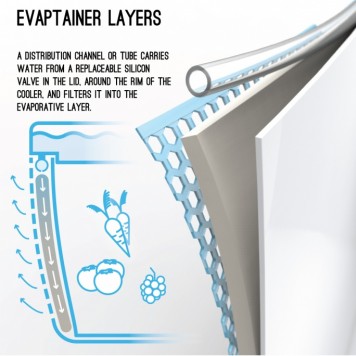
One challenge facing people living without access to electricity is access to refrigeration for perishable food. The Evaptainer promises to help fix that.

The trick to this contraption is the same trick humans use when they get too hot: it sweats. Users pour water into the model, and as it evaporates, it brings the down the device’s temperature by up to 35 degrees. That means produce that used to go bad in two days can now keep for several.

It’s currently being tested in Morocco, but the folks behind it hope to bring it to the global market next year. Cool.


https://d267cvn3rvuq91.cloudfront.net/i/images/thumbnail.png?sw=1920


This Impossible Powerless Cooling Device
Is Inspired by Nature.


Sure Chill is a unique new cooling technology with the power to impact on people and businesses around the world. It doesn’t need a constant power source - with intermittent or erratic power, it works perfectly well. Without power, but teamed with solar, it also works perfectly. Sure Chill acts like an energy store to set appliances free. It shouldn't be possible, yet it is. It's simply impossible cooling.

Sure Chill Technology
Inspired by nature to work with nature, the technology behind Sure Chill makes the impossible, possible

A cool problem
From refrigerators that chill cans of cola in a hot Manhattan summer to those that store medicines and support blood banks in remote medical centres, refrigeration systems are essential to every part of people’s lives. But they’re inefficient. They need to have constant connection to power and, even in the best conditions, do not control temperature well.
But more than that, conventional coolers are in a constant battle with nature. While the sun heats the world vast amounts of energy are used to cool things down again. There is a need for a sustainable cooling solution that works. And keeps on working.
A simple idea

We started with water. It’s all around us but it’s also incredible. It has an amazing property that’s unique in the universe. At four degrees, water is at its heaviest. At four degrees it sinks. At any other temperature it rises. This scientific fact inspired us to create a new kind of refrigeration system. A seemingly intelligent system that adapts its temperature naturally so it automatically cools to the optimum temperature: a constant four degrees even without power.

An ingenious solution
Sure Chill is a brand new kind of cooling system. It doesn’t need a constant power source. In an on-grid situation with intermittent power, it works perfectly well. In an off-grid situation, where a solar panel may be used, a Sure Chill powered refrigerator doesn’t even need a rechargeable battery. It shouldn’t work but it does. And it works beautifully.

Water surrounds a Sure Chill refrigeration compartment. When it has power, the water cools and forms ice above the compartment leaving only water at four degrees cooling the contents. When the power is switched off, the water warms and rises while the ice begins to melt, keeping only four-degree water cooling the contents of the compartment. So it has its own internal and entirely natural energy store that maintains a completely steady temperature. The system can operate like this, without power, for days and weeks.
A better future

Sure Chill is a cooling system that’s life-changing. And life-saving. Because the system is based on a law of nature, appliances using it are reliable and robust even in the harshest environments. Because a Sure Chill refrigerator is designed to work without power for many days, it can help get life-saving medicines to remote communities. And because it’s Smart Grid ready, in places with advanced power networks it can be powered whenever energy is cheapest, saving money for consumers and energy companies as well as saving resources for the planet.

For more information, visit: http://www.surechill.com/

https://harbingertrends.files.wordpress.com/2016/02/howitworks-2.png?w=292&h=362&crop=1https://harbingertrends.files.wordpress.com/2016/02/usr-609-img-1407387457-7f9e9-356x356.jpg?w=362&h=362&crop=1


Saturday, August 20, 2016

Louis Pierre un sans papier Haitien sauve la République Dominicaine

JO RIO 2016:
Un haitien donne la première médaille à la République Dominicaine

By Anmwe News   Posted on August 18, 2.

RIO DE JANEIRO, Brasil – Luisito Pie Jésus a vaincu l’espagnol Tortosa pour remporter la médaille de bronze dans la catégorie des moins de 58 kg de taekwondo, la première médaille pour la République dominicaine dans les Jeux olympiques de 2016 à Rio.

Luisito Pie est de descendance haitienne, il est né a Bayaguana, Monte Plata, le 4 Mars, 1994 et est un athlète dominicain en compétition de taekwondo.

En 2014, Pie a remporté la médaille d’or aux États-Unis aux Jeux Centre Amérique et des Caraïbes dans la catégorie des moins de 58 kg.

En Juillet 2015, il a participé aux Jeux panaméricains, gagnant la médaille d’argent dans la catégorie des moins de 58 kg.

Et maintenant, Pie a participé aux Jeux Olympiques d’été de 2016, où il a remporté la médaille de bronze dans la catégorie moins de 58 kg, en donnant la première médaille à la République dominicaine aux Jeux Olympiques de Rio 2016.

La République célèbre, Luisito Pie fait la une dans les journaux mais ne fait surtout pas l’unanimité, mais toutefois, c’est une gloire pour les dominicains d’origine haitienne, une victoire pour les haïtiens vivant en République Dominicaine et une fierté pour les haïtiens en général.

Anmwe
Photo/Univision/Patriotas dominicanos
www.anmwe.com

http://sports.anmwe.com/jo-rio-2016-un-haitien-donne-la-premiere-medaille-a-la-republique-dominicaine/


RIO DE JANEIRO, Brazil (sentinel.ht) – Luisito Pie (real name Louis Pierre), a Dominican of Haitian descent, has won the first, possibly only, medal for the Dominican Republic at the 2016 Olympic Games in Rio.
Pie won the Bronze in Men’s 58kg Taekwondo on Wednesday by defeating Spain’s Jesus Tortosa..

It is the Dominican Republic’s first medal of the tournament and the irony was not lost on journalist and Haiti expert, Jonathan Katz, on Twitter.

Luis Pie Gana medalla
para Republica Dominicana
en Rio 2016


The Irony
Haiti and the Dominican Republic share the island of Haïti or Quisqueya, also known as, Hispanola. The two nations have had tense relations throughout history. These tensions reached a peak in 2013 when the D.R. government acted to retroactively strip citizenship from Dominicans of foreign descent, dating back to 1918; an overwhelmingly Haiti-descended community.

After boycotts and opposition movements against the D.R. were held in the D.R., itself, Haiti, New York, Boston, Miami and on the front door step of the Obama White House in D.C., the country began to backtrack, slightly. The Dominican government had issued measures that effectively returned citizenship to the vast majority of those it had previously taken from but through a process the victims have called demeaning.

The Dominican government still launched an aggressive and massive deportation campaign against undocumented immigrants in the summer of 2015. But human rights observers say the spontaneous and arbitrary round-ups and often prolonged detentions or hasty deportations have diverged from international norms.

The rights and refugee groups say these actions have disenfranchised legitimate residents and citizens of the country. Many groups, including Amnesty International have condemned the humanitarian crisis the deportations are creating along the binational border.

Samuel Maxime - Editor-in-Chief


"Luis Pie Gana la Primera medalla para República Dominicana en Rio 2016 y la 6ta en toda la historia de los juegos Olímpicos para República Dominocana."

Luisito Pie ganó la medalla de bronce para darle la primera a la República Dominicana en los Juegos Olímpicos de Río de Janeiro.

Pie, de 22 años, superó por 6-5 al español Jesús Tortosa con una patada en la ronda adicional de punto de oro, tras empatar 5-5 los tres asaltos reglamentarios en la categoría de los 58 kilos.

El laureado atleta venía de ganar la medalla de plata el año pasado en los Juegos Panamericanos de Toronto. También logró el bronce en los Juegos Centroamericanos de Veracruz, México en 2014.

Por cuarta vez de forma seguida, la República Dominicana suma al menos una presea al medallero general de los Juegos Olímpicos.

Es la segunda medalla que logra el deporte de taewkondo en unos Juegos Olímpicos. La primera la ganó Gabriel Mercedes al conquistar una presea de plata en Juegos Olímpcios de Beijing en el 2008 en la categoría de menos 58 kilogramos.

Es la séptima medalla que logra la República Dominicana en la más grande cita mundial deportiva. Tres de oro, dos logradas por Felix Sánchez en Atenas el 2004 y Londres 2012, y una por el boxeador Félix Díaz en Bejiing 2008. Dos de plata, además de Mercedes, la de Luguelín Santos en los 400 metros planos en Londres 2012 y otra de bronce por el boxeador Pedro Julio Nolasco en los JJOO de Los Angeles 1984. 

Visita nuestra página web oficial de El Informe RD. Aquí podrás encontrar informaciones actualizadas.


https://67.media.tumblr.com/b48904dede3a1676eef52c5aedfe3dc7/tumblr_oc7ixpXgK71tbrrofo1_1280.jpg
Silver medalist Tawin Hanprab of Thailand, gold medalist Shuai Zhao of China, bronze medalist Taehun Kim of Korea and bronze medalist Luisito Pie of the Dominican Republic stand on the podium during the medal ceremony for the Taekwondo Men's -58kg contest during Day 12 of the Rio 2016 Olympic Games at Carioca Arena 3 on August 17, 2016 in Rio de Janeiro, Brazil.


Louis Pierre un sans papier Haitien
sauve la République Dominicaine
Ajoutée le 19 août 2016
RIO DE JANEIRO, Brésil 
Luisito Pie (de son vrai nom Louis Pierre),  un Dominicain d'origine haïtienne, a remporté le premier, peut-être l'unique, médaille pour la République dominicaine aux Jeux Olympiques de 2016 à Rio.
https://67.media.tumblr.com/3cf5d7670d9d411b97440ba37c359635/tumblr_oc7ixpXgK71tbrrofo2_540.jpg