Monday, September 27, 2021

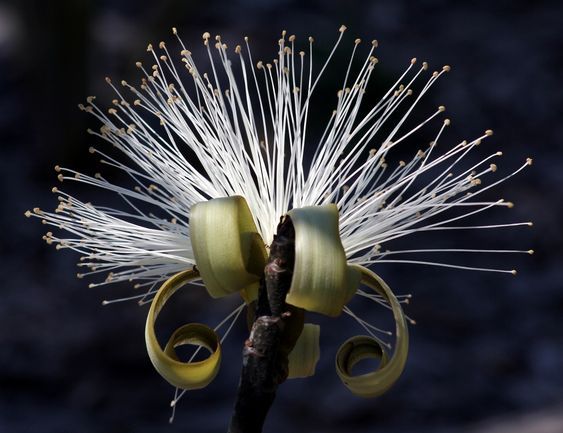
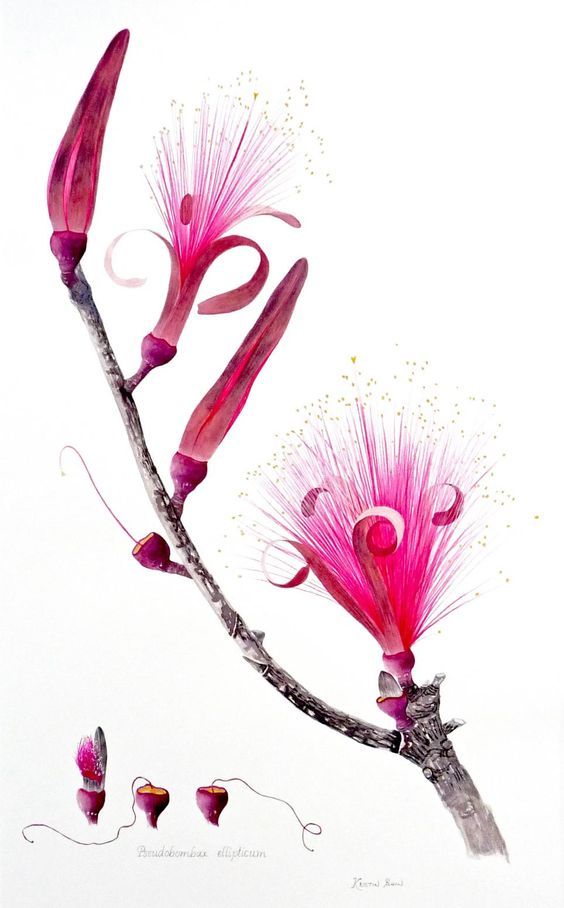
MiMi 🌹 Pseudobombax Ellipticum

MiMi  Tree & Flowers
https://64.media.tumblr.com/936735e5df4bfa3c4d5c4fa1b72caea3/d00a9538b4994816-ca/s640x960/036aaaeec0e9b3e38322b5ade7364243527ea776.jpghttps://64.media.tumblr.com/a8a3d01375a922d93e3afd3c822df8e2/d00a9538b4994816-99/s500x750/b8c90c2384c21ad7df6b26898c2dda5e782678a2.jpg
🌹 Pseudobombax Ellipticum
A.K.A.
    🌹 Shaving Brush Tree
    🌹 Flor de Carolina
    🌹 Amapolla Tree
    🌹 Dr. Seuss tree
    🌹 Shaving Tree
Tumblr: Image

The tree is native to southern Mexico, El Salvador, Guatemala, Hispaniola, Honduras and Cuba. 
 
Pseudobombax ellipticum, with common names including shaving brush tree, Dr Seuss tree, and amapolla tree, is a species of plant in the subfamily Bombacoideae of the family Malvaceae 
 
Distribution
The tree is native to southern Mexico, El Salvador, Guatemala, Hispaniola, Honduras and Cuba.
 
Description
Pseudobombax elipticum is a tree that can reach 18 m (60 ft) in height and 1.3 m (4 ft) d.b.h. Its branches are close to the base of the stem. It is a deciduous tree with succulent stems. Each of the flowers can produce hundreds of tiny black seeds (.1mm) that germinate within approximately 30 days.
The flowers are fragrant and if peeled back quite sticky.
 
Uses
Uses include firewood and wood for carving handicrafts.
The attractive flowers are used to decorate homes and churches in Central America. In Central America, a highly intoxicating drink is made from the tree.
Cultivation 
The tree is grown as an ornamental tree in Florida, Hawaii, and coastal Southern California. 
https://64.media.tumblr.com/84990e271d32a4d6893ea4076c9947ce/d00a9538b4994816-a0/s640x960/b49e418a674c451ca2dd73e8f1bc6644fe043e00.jpg
MiMi
Pseubombax Ellipticum
Flor de Carolina
Shaving Tree
👇 📽️ 👇
👇 📽️ 👇
https://youtu.be/LAdFsiBxPz8
 
Shaving Brush Tree Overview
Pseudobombax ellipticum is a spreading, deciduous tree species in the Malvaceae family. Originating from the Americas this plant produces bottlebrush-like, scented, pink or sometimes white flowers in spring before the leaves. They open from large, cigar-shaped buds and lead onto thick, oval-shaped seed pods with a fluffy interior. They are composed of many stamens, from which pollen is produced. Palm-shaped leaves are red upon emergence, developing to orange-bronze and finally green with age. This plant can provide nice shade.
 
🌷 🌹 🥀🌵 🎄 🌲 🌳 🌴 🌱 🌿 ☘️ 🍀 🎍 🎋 🍃 🍂 🍁 🌾 🌷 🌹 🥀 🌺 🌸 🌼 🌻 🌞
https://64.media.tumblr.com/383feb573e68956ac4dfa8142298be70/d00a9538b4994816-94/s2048x3072/efedfd3e1373499b9c21d628fa5493c774c6607f.jpg
🌴  ☀️  🌎  🎑

Sunday, August 29, 2021

Haïti 🎼 Chérie❤️


🇭🇹 Haïti Chérie
Written and composed by Dr. Othello Bayard de Cayes and initially called "Souvenir d'Haiti," it represents the pride Haitian people feel for their country and culture. Within the Haitian community, at home and abroad, it is widely considered as a second national anthem.
Haïti Chérie
 Emeline Michel · Kali
👇 📺 👇

Ayiti cheri pi bon peyi pase ou nanpwen
Fòk mwen te kite w pou mwen te kap konprann valè w
Fòk mwen te manke w pou m te kap apresye w
Pou m santi vreman tout sa ou te ye pou mwen

Gen bon solèy bon rivyè e bon brevaj
Anba pyebwa ou toujou jwenn bon lonbraj
Gen bon ti van ki bannou bon ti frechè
Ayiti Toma se yon peyi ki mè chè

Lè w lan peyi blan ou gen yon vye frèt ki pa janm bon
E tout lajounen ou oblije ap boule chabon
Ou pakab wè klè otan syèl-la andèy
E pandan si mwa tout pyebwa pa genyen fèy

Lan peyi mwen gen solèy pou bay chalè
Diran lane tout pyebwa ap bay lonbraj
Bon briz de mè toujou soufle sou no plaj
Ayiti Toma se yon peyi ki mè chè
Kon w lan peyi blan ou wè tout figi yon sèl koulè
Lanpwen milatrès bèl marabou, bèl grifonn kreyòl
Ki renmen bèl wòb bon poud e bon odè
Ni bèl jenn nègès ki konn di bon ti pawòl

Lan peyi mwen lè tout bèl moun si la yo
Sòti lan mès ou sòti lan sinema
Se pou gade se pou rete dyòl lolo
A la bon peyi se ti Dayiti Toma!

Lè w lan peyi blan ou pa wè mango ni kòk di tou
Lanpwen sapoti ni bèl kayimit vèt ou vyolèt
Lanpwen zanana ni bèl ti pòm kajou
Ki ban nou bon nwa pou nou fè bon ti tablèt

Ou jwenn zoranj ki soti an Itali
Men qui fennen qui toujou mwatye pouri
An Ayiti sa si bon se koupe dwèt
E sou se rapò nou bay tout peyi payèt

Lè w lan peyi mwen kote ou pase tout lon chemen
Se bonjou kompè e makomè e pitit la yo?
Sa'n pa wè konsa manyen rentre ti bren
Pou'n bwa ti kichoy pou nou jwe de ti kout zo.

Fin bay lan men se rentre lan gran pale
Se politik se movèz sitiyasyon
Sa pou nou fè se pou nou pran li kou l ye
Men bon Dye si bon la ban nou benediksyon

Lè w ou lan peyi blan ou pè promennen nwit tankou jou
Tout moun pè mache prese prese wa di se chen fou
Kote yo prale pouki yap kouri konsa?
Yo pè pèdi tan yo pa janm di: kouman sa?

Lan peyi mwen moun pa rete avek lè
Genyen libète ou gen tan pou pran frechè
Kote ou pase se bonjou se bay lan men
Moun pa janm prese yo koze tout lon chemen

Lè w an Ayiti ou pa janm manke tan pou soufle
Sak pa fèt jodi ou kap fè li demen si ou vle
Kan demen rive kel bon ou kel pa bon
Sa pa fè anyen tout moun konn di bon dye bon.

An Ayiti moun pa janm dezespere
Nou gen la fwa lan yon Dye ki pa janm manti
Nap fè jodi kan demen pa asire
A la bon peyi o mon Dye, se Ayiti!

❤️💙💚🤍❤️💙❤️💙💚🤍❤️💙
Haïti Chérie
🎻 Violin & Piano 🎹
👇 📺 👇

Georges Moustaki - Haïti Chérie
👇 📺 👇

❤️💙💚🤍❤️💙❤️💙💚🤍❤️💙

👇 📺 👇


Haitian Creole & English Subtitles


❤️💙💚🤍❤️💙❤️💙💚🤍❤️💙

Friday, August 27, 2021

Le Nouveau Palais National D´Haiti

Le Nouveau
Palais National d´Haiti
👇   📺   👇

Haiti National Palace Proposition
👇 📺 👇


👇   📺   👇
🇭🇹

Thursday, August 26, 2021

Vetiver grass 🌾 Chrysopogon zizanioides

Chrysopogon zizanioides
Vetiver Grass

Vetiver grass, is Chrysopogon zizanioides, formerly known as Vetiveria zizanioides, is a perennial grass of Andropogoneae tribe of the Poaceae family.  The Andropogoneae tribe also include the infamous corn ( Zea ), lallang ( Imperata ), lemongrass ( Cymbopogon ), Job’s tears ( Coix ), sugarcane ( Sacharum ), sorghum ( Sorghum ), etc.  Thus it is not surprise vetiver resembles lemongrass in many morphological characteristics.  All member of this tribe utilize C4 carbon fixation in photosynthesis.

In its origin Indian Subcontinent,  it is known as khus ( Hindi ), Valo ( Gujarati, Marathi ), Kuruveeru ( Telugu ), Vattiver ( Tamil ), Ramaccham ( Malyalam ), etc.

Vetiver can grow up to 1.5 meters in height and form clumps as wide.  The flowers are brownish-purple.  Its root grow vertically downward, up to 4 meter in depth.  Vetiver is frost and fire resistant, drought tolerant, and can sustain heavy grazing.

Most commercially grown vetiver are sterile.  They propagate via producing small offsets from stems.  Thus they are non-invasive and can be easily controlled.  One widely cultivated non-fertile cultigen is ‘Sunshine’, a genotype named after the town of Sunshine, Louisiana, USA.


Vetiver is widely cultivated in the tropical regions of the world.  The world’s major producers are : Haiti, India, Java and Réunion.   It is grown for many different purposes.  Its vertically grown roots make it an excellent stabilizing hedge for stream banks, terraces, and slopes.  Vetiver attracts pest, such as stem borer ( Chilo partellus ), to lay their eggs on vetiver, instead of on crop.  However, the mainly purpose for vetiver cultivation is for its essential oil distilled from its roots, to be used in perfumery industry.  The leaves, as a by-product, are feed to cattle, goats, sheep and horses.  The roots are also used in traditional medicine, as air freshener, to make ropes, and mixed with mud to make bricks for building houses, and to mark boundary lines.