Showing posts with label Flora. Show all posts

Monday, September 27, 2021

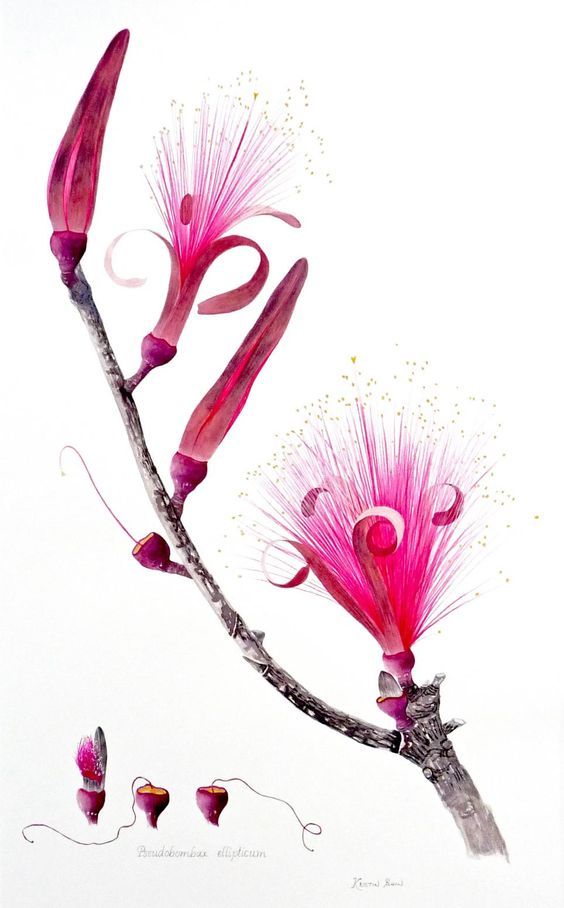
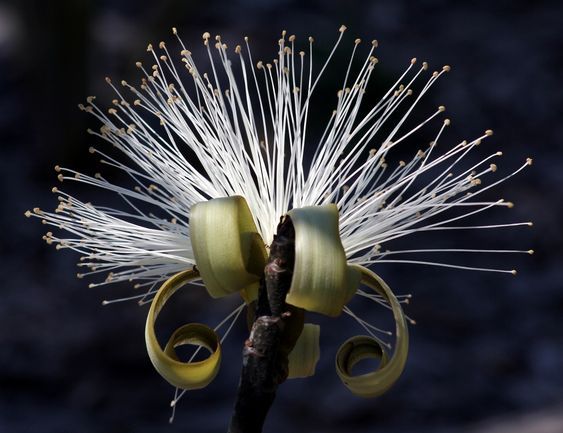
MiMi 🌹 Pseudobombax Ellipticum

MiMi  Tree & Flowers
https://64.media.tumblr.com/936735e5df4bfa3c4d5c4fa1b72caea3/d00a9538b4994816-ca/s640x960/036aaaeec0e9b3e38322b5ade7364243527ea776.jpghttps://64.media.tumblr.com/a8a3d01375a922d93e3afd3c822df8e2/d00a9538b4994816-99/s500x750/b8c90c2384c21ad7df6b26898c2dda5e782678a2.jpg
🌹 Pseudobombax Ellipticum
A.K.A.
    🌹 Shaving Brush Tree
    🌹 Flor de Carolina
    🌹 Amapolla Tree
    🌹 Dr. Seuss tree
    🌹 Shaving Tree
Tumblr: Image

The tree is native to southern Mexico, El Salvador, Guatemala, Hispaniola, Honduras and Cuba. 
 
Pseudobombax ellipticum, with common names including shaving brush tree, Dr Seuss tree, and amapolla tree, is a species of plant in the subfamily Bombacoideae of the family Malvaceae 
 
Distribution
The tree is native to southern Mexico, El Salvador, Guatemala, Hispaniola, Honduras and Cuba.
 
Description
Pseudobombax elipticum is a tree that can reach 18 m (60 ft) in height and 1.3 m (4 ft) d.b.h. Its branches are close to the base of the stem. It is a deciduous tree with succulent stems. Each of the flowers can produce hundreds of tiny black seeds (.1mm) that germinate within approximately 30 days.
The flowers are fragrant and if peeled back quite sticky.
 
Uses
Uses include firewood and wood for carving handicrafts.
The attractive flowers are used to decorate homes and churches in Central America. In Central America, a highly intoxicating drink is made from the tree.
Cultivation 
The tree is grown as an ornamental tree in Florida, Hawaii, and coastal Southern California
https://64.media.tumblr.com/84990e271d32a4d6893ea4076c9947ce/d00a9538b4994816-a0/s640x960/b49e418a674c451ca2dd73e8f1bc6644fe043e00.jpg
MiMi
Pseubombax Ellipticum
Flor de Carolina
Shaving Tree
👇 📽️ 👇
👇 📽️ 👇
https://youtu.be/LAdFsiBxPz8
 
Shaving Brush Tree Overview
Pseudobombax ellipticum is a spreading, deciduous tree species in the Malvaceae family. Originating from the Americas this plant produces bottlebrush-like, scented, pink or sometimes white flowers in spring before the leaves. They open from large, cigar-shaped buds and lead onto thick, oval-shaped seed pods with a fluffy interior. They are composed of many stamens, from which pollen is produced. Palm-shaped leaves are red upon emergence, developing to orange-bronze and finally green with age. This plant can provide nice shade.
 
🌷 🌹 🥀🌵 🎄 🌲 🌳 🌴 🌱 🌿 ☘️ 🍀 🎍 🎋 🍃 🍂 🍁 🌾 🌷 🌹 🥀 🌺 🌸 🌼 🌻 🌞
https://64.media.tumblr.com/383feb573e68956ac4dfa8142298be70/d00a9538b4994816-94/s2048x3072/efedfd3e1373499b9c21d628fa5493c774c6607f.jpg
🌴  ☀️  🌎  🎑

Thursday, August 26, 2021

Vetiver grass 🌾 Chrysopogon zizanioides

Chrysopogon zizanioides
Vetiver Grass

Vetiver grass, is Chrysopogon zizanioides, formerly known as Vetiveria zizanioides, is a perennial grass of Andropogoneae tribe of the Poaceae family.  The Andropogoneae tribe also include the infamous corn ( Zea ), lallang ( Imperata ), lemongrass ( Cymbopogon ), Job’s tears ( Coix ), sugarcane ( Sacharum ), sorghum ( Sorghum ), etc.  Thus it is not surprise vetiver resembles lemongrass in many morphological characteristics.  All member of this tribe utilize C4 carbon fixation in photosynthesis.

In its origin Indian Subcontinent,  it is known as khus ( Hindi ), Valo ( Gujarati, Marathi ), Kuruveeru ( Telugu ), Vattiver ( Tamil ), Ramaccham ( Malyalam ), etc.

Vetiver can grow up to 1.5 meters in height and form clumps as wide.  The flowers are brownish-purple.  Its root grow vertically downward, up to 4 meter in depth.  Vetiver is frost and fire resistant, drought tolerant, and can sustain heavy grazing.

Most commercially grown vetiver are sterile.  They propagate via producing small offsets from stems.  Thus they are non-invasive and can be easily controlled.  One widely cultivated non-fertile cultigen is ‘Sunshine’, a genotype named after the town of Sunshine, Louisiana, USA.


Vetiver is widely cultivated in the tropical regions of the world.  The world’s major producers are : Haiti, India, Java and Réunion.   It is grown for many different purposes.  Its vertically grown roots make it an excellent stabilizing hedge for stream banks, terraces, and slopes.  Vetiver attracts pest, such as stem borer ( Chilo partellus ), to lay their eggs on vetiver, instead of on crop.  However, the mainly purpose for vetiver cultivation is for its essential oil distilled from its roots, to be used in perfumery industry.  The leaves, as a by-product, are feed to cattle, goats, sheep and horses.  The roots are also used in traditional medicine, as air freshener, to make ropes, and mixed with mud to make bricks for building houses, and to mark boundary lines.