Showing posts with label History. Show all posts

Thursday, October 14, 2021

The Greatest Heist In History 🇭🇹 🇫🇷

'The Greatest Heist In History': 
How Haiti Was Forced To Pay Reparations For Freedom
Planet Money   October 5, 2021
🇭🇹   🇫🇷   🇺🇸

In recent weeks, thousands of refugees from Haiti have arrived at the U.S.-Mexico border, desperate for a better life. Most left Haiti years ago, after a 2010 earthquake ravaged what was already one of the most dismal economies in the world. They had originally settled in places like Chile, but the politics of the region have made them feel unwelcome, discriminated against, and fearful of the future.

The Haitian refugees hoped the United States, under President Biden, would offer them a lifeline. They were wrong. The Biden administration has been sending thousands back to Haiti, even though Haiti is a disaster zone, and many of the refugees fled it years ago. Some of those the U.S. government forcibly sent to Haiti are kids who have never lived there.

Ambassador Daniel Foote, who was appointed by President Biden as the U.S. special envoy to Haiti in July, resigned in protest against his administration's policy. "I will not be associated with the United States' inhumane, counterproductive decision to deport thousands of Haitian refugees," Foote wrote in his resignation letter.

The Haiti that refugees are being sent back to is a nation in crisis. With its unlucky coordinates on the map and its poor infrastructure, Haiti has been devastated by multiple hurricanes and earthquakes in recent years, including a 7.2 magnitude earthquake in August. In July, Haiti's president, Jovenel Moïse, was assassinated by Colombian mercenaries, some of whom had received U.S. military training. A Florida-based security company reportedly connected whoever wanted Moïse killed with the mercenaries, but the details of why Moïse was killed and who directed the mercenaries are still murky.

What is clear, however, is that Moïse's assassination continues Haiti's centuries-long political instability. In 2015, the World Bank concluded that Haiti's biggest political problem is that "a social contract is missing between the state and its citizens." Ambassador Foote, in his resignation letter, blasted the United States and other nations for contributing to this problem for the umpteenth time by unabashedly backing Moïse's unelected replacement, Ariel Henry. Henry was appointed Prime Minister by Moïse in July, and took on the additional role of President after Moïse's assassination. Haiti's chief prosecutor said he found evidence linking Henry to the president's killing, and Henry promptly fired him. Some Haitian authorities have asked Henry to step down and pleaded with the international community to stop supporting him. "This cycle of international political interventions in Haiti has consistently produced catastrophic results," Foote wrote.

Haiti is one of the poorest nations in the world, and rich countries have their fingerprints all over the nation's stunted development. The United States worked to isolate a newly independent Haiti during the early 19th century and violently occupied the island nation for 19 years in the early 20th century. While the U.S. officially left Haiti in 1934, it continued to control Haiti's public finances until 1947, siphoning away around 40% of Haiti's national income to service debt repayments to the U.S. and France.

Much of this debt to France was the legacy of what the University of Virginia scholar Marlene Daut calls "the greatest heist in history": surrounded by French gunboats, a newly independent Haiti was forced to pay its slaveholders reparations. You read that correctly. It was the former slaves of Haiti, not the French slaveholders, who were forced to pay reparations. Haitians compensated their oppressors and their oppressors' descendants for the privilege of being free. It took Haiti more than a century to pay the reparation debts off.

The Tragic Hope of Revolutionary Haiti

Haiti won its independence from France in 1804, and it was almost immediately made a pariah state by world powers. It was an independent, black-led nation — created by slaves who had cast aside their chains and fought their oppressors for their freedom — during a time when white-led nations were enforcing brutal, racist systems of exploitation around the world.

Haiti, then known as Saint-Domingue, had been the crown jewel of the French empire. It was the most lucrative colony in the whole world. French planters forced African slaves to produce sugar, coffee, and other cash crops for the global market. The system seemed to work well. That is, until the French and American revolutions helped to inspire, in 1791, what became the world's largest and most successful slave revolt. Against all odds, the slaves won. Former slaves sent slaveholders scurrying to France and America — and Haitians successfully fought back subsequent efforts to re-enslave them. Haiti was the first nation to permanently ban slavery.

But as a nation of freed black slaves, Haiti was a threat to the existing world order. President Thomas Jefferson worked to isolate Haiti diplomatically and strangle it economically, fearing that the success of Haiti would inspire slave revolts back home. With the invention and spread of the cotton gin, slavery was becoming much more lucrative at the very same time a free Haiti was coming into existence, and slaveholders in the United States and other countries clung to and expanded the inhumane means of production. Haitian success was perceived as a threat to this system for decades, and the United States didn't officially recognize Haiti until 1862, as slavery began being abolished.

[Editor's note: This is an excerpt of Planet Money's newsletter. You can sign up here.]

During Haiti's critical period of development, France intervened even more directly than the U.S. to thwart its success. In July 1825, the French King, Charles X, sent an armed flotilla of warships to Haiti with the message that the young nation would have to pay France 150 million francs to secure its independence, or suffer the consequences. That sum was 10 times the amount the United States had paid France in the Louisiana Purchase, which had doubled the size of the U.S.

Almost literally at gunpoint, Haiti caved to France's demands in order to secure its independence. The amount was too much for the young nation to pay outright, and so it had to take out loans with hefty interest rates from a French bank. Over the next century, Haiti paid French slaveholders and their descendants the equivalent of between $20 and $30 billion in today's dollars. It took Haiti 122 years to pay it off. Professor Marlene Daut writes it "severely damaged the newly independent country's ability to prosper."

Righting The Wrongs

After the 2010 earthquake completely devastated Haiti, scholars and journalists wrote a letter to the French president demanding that France pay back Haiti. The French economist Thomas Piketty resurrected the idea in 2020, arguing that France owes Haiti at least $28 billion. The French government, under multiple presidents, has balked at the idea, and it is unlikely to pay Haiti back anytime soon.

But if the rich world wants to help right the wrongs done to Haiti in the past, perhaps the most effective policy right now would be to accept more Haitian refugees. This wouldn't only be a humane policy that would improve their and their future families' lives. It would also likely be a boost to the Haitian economy. According to the World Bank, Haitian expatriates sent $3 billion in remittances back home to Haiti in 2018, which was almost one-third of the island nation's entire GDP.

Did you enjoy this newsletter segment? Well, it looks even better in your inbox! You can sign up here.

 🇭🇹   🇫🇷   🇺🇸
 
 
 🇭🇹   🇫🇷   🇺🇸

Friday, January 12, 2018

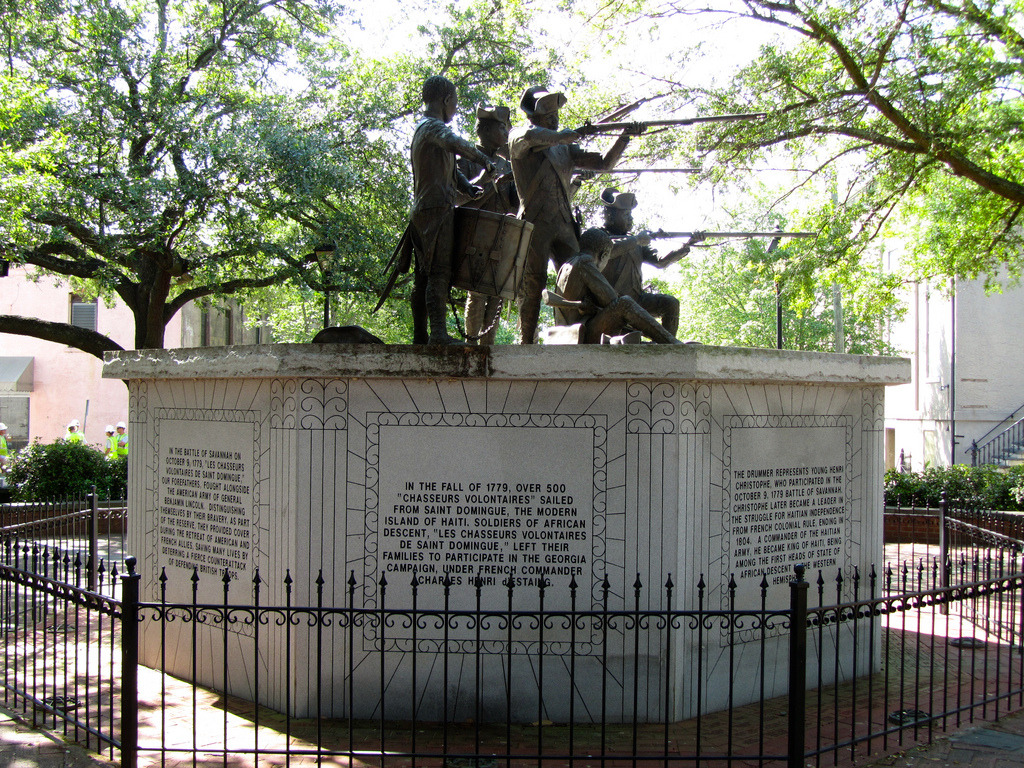
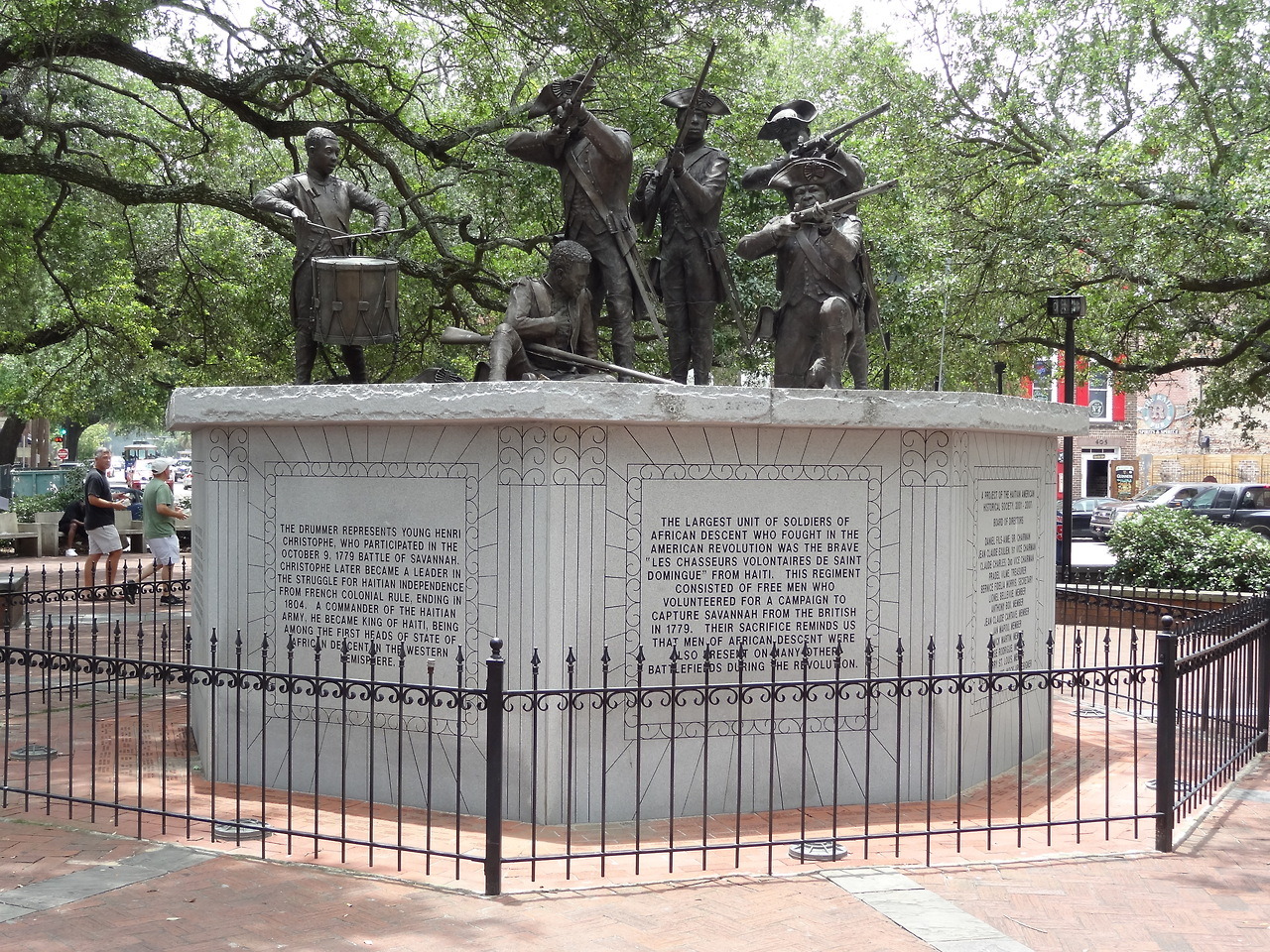
Memorial Sculpture in Savannah Honors more than 500 Haitian Soldiers

In Savannah in 2007
A Memorial Sculpture was Dedicated to the
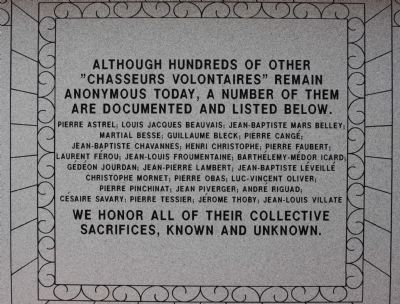
Chasseurs-Volontaires de Saint-Domingue.
https://78.media.tumblr.com/b3461df70dd9d6a828d10cb9e015cfd1/tumblr_p2gcstUVfd1tbrrofo5_r1_1280.jpg
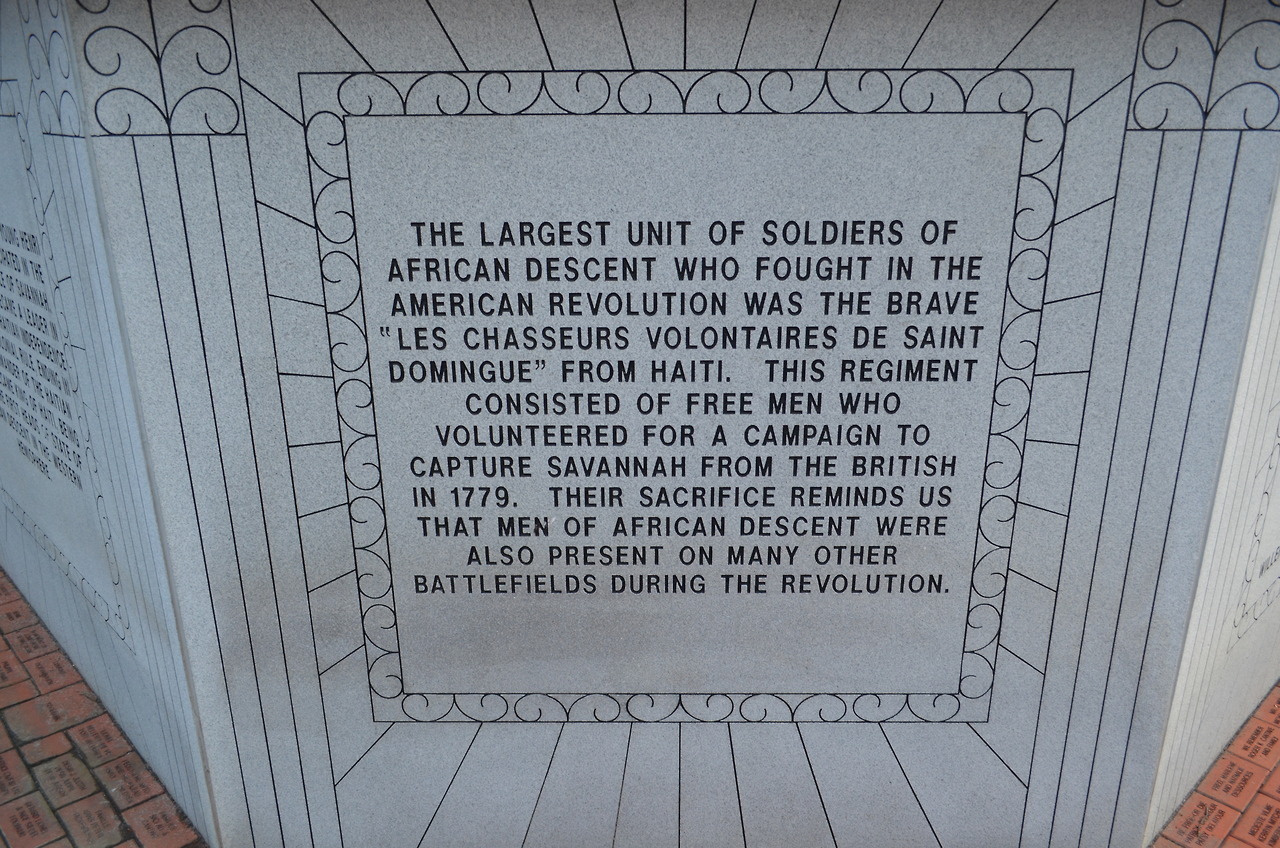
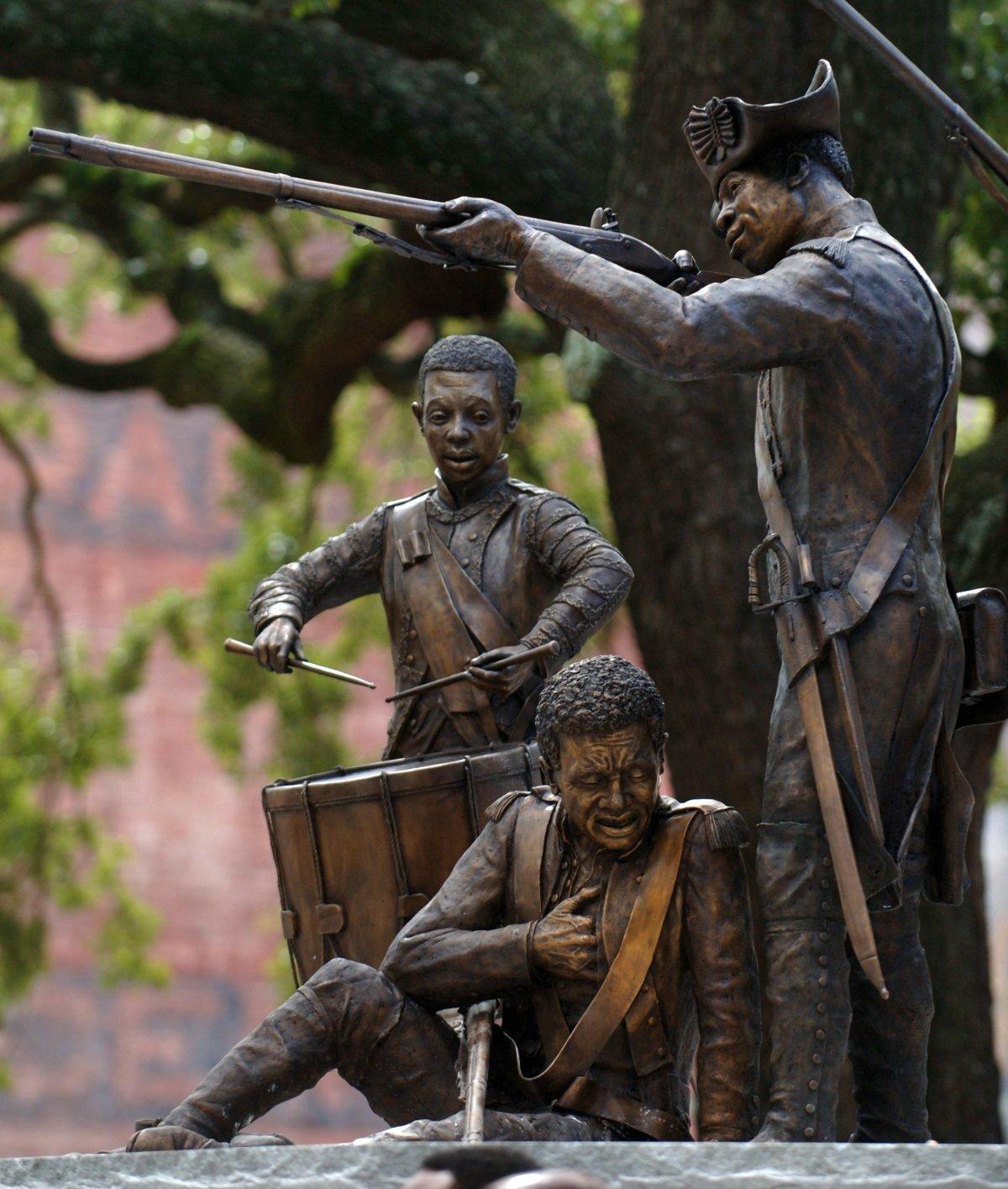
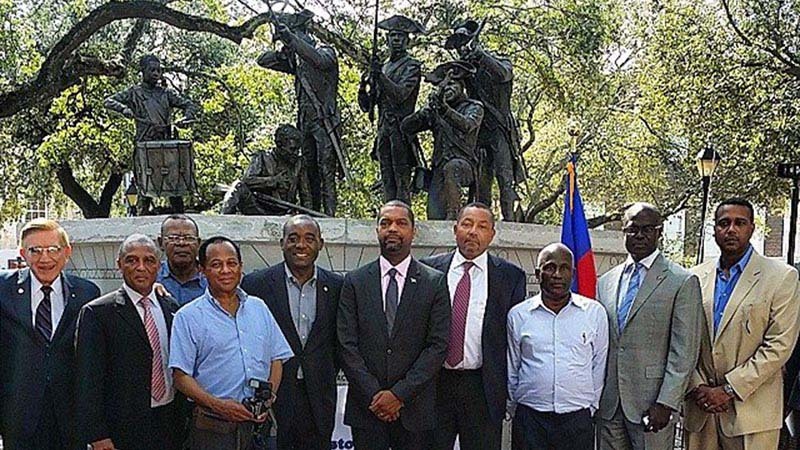
The monument honors more than 500 Haitian soldiers who fought in the Revolutionary War's bloody siege of Savannah
https://78.media.tumblr.com/8a5f2c4612030744456ee3e713225249/tumblr_p2gcstUVfd1tbrrofo2_1280.jpg
In 1779, more than 500 recruits from Saint-Domingue (the French colony which later became Haiti), under the overall command of French nobleman Charles Hector, Comte d'Estaing, fought alongside American colonial troops against the British Army during the siege of Savannah.

This was one of the most significant, foreign contributions to the American Revolutionary War. This French-colonial force had been established six months earlier and included hundreds of soldiers of color in addition to white soldiers and a couple black slaves.
https://68.media.tumblr.com/0e17334d87d9091c37999eeaab46f75d/tumblr_p2gcpwhAUm1tbrrofo1_1280.jpg
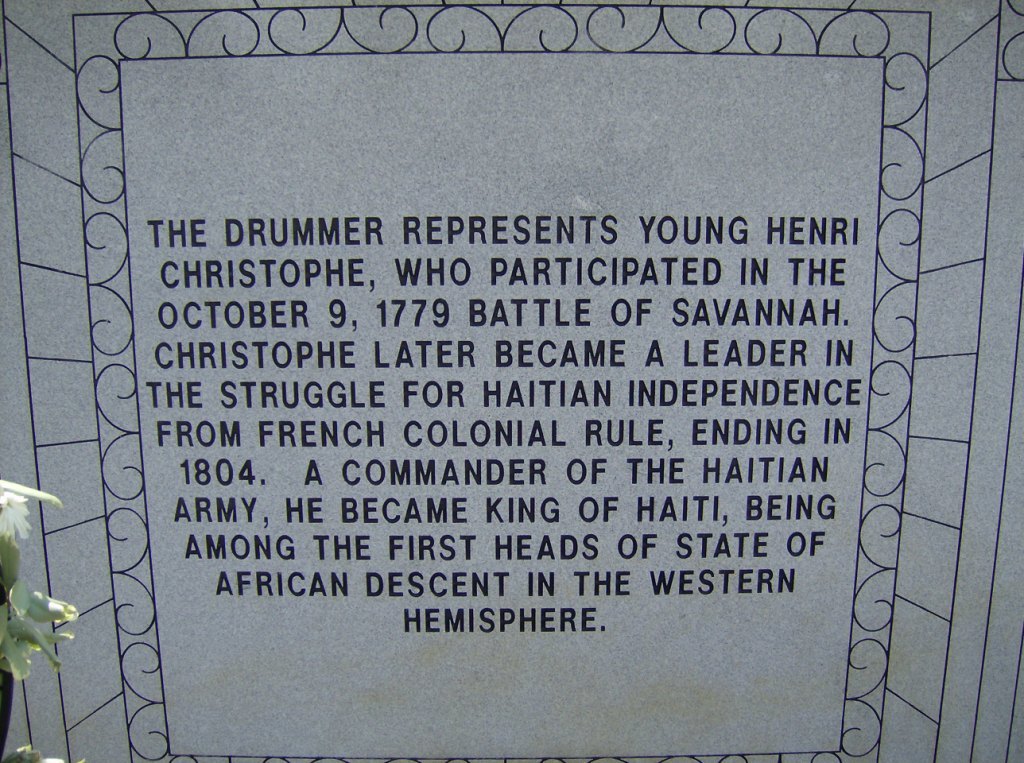
Despite stories to the contrary, slave Henri Christophe could not have served as a drummer boy as he was 22 years old at the time. He would later become the King of Haiti.
https://78.media.tumblr.com/bda5f02857e19487475161fb7198315a/tumblr_p2gcstUVfd1tbrrofo4_1280.jpg
https://78.media.tumblr.com/93b0c17be3a8ce94442d59ed3526340b/tumblr_p2gipotXat1tbrrofo3_r1_1280.jpg
 https://78.media.tumblr.com/5549192246aad05332c47d800861de74/tumblr_p2gcstUVfd1tbrrofo3_400.jpg
https://78.media.tumblr.com/1218d1fc0b619b5855e623cd27fbfca2/tumblr_p2gipotXat1tbrrofo2_1280.jpg


Saturday, June 17, 2017

Panama'm Tonbé * Music + Dance


Strings
Panama'm Tonbé
(OFFICIEL)


« Panama’m tonbé » est une légende tirée d'une histoire tragique, mettant en vedette la défiance du Président Florvil Hyppolite face aux mœurs chéries de notre pays, son panama tomba au carrefour Bainet… 
Daniel Santos y la Sonora Matancera
Panama'm Tonbé


Que le chapeau de quelqu'un tombe était un mauvais présage en Haïti.

Louis Mondestin Florvil Hyppolite (1828 - 1896) a été le président haïtien du 9 octobre 1889 au 24 mars 1896.

Le 24 mars 1896, Hyppolite allait partir à la ville de Jacmel à cheval avec l'intention de mater une insurrection. 
Il a eu une crise cardiaque avant d'y arriver.

Une légende se propagea à propos de l'évènement où le chapeau d'Hyppolite était tombé alors qu'il était à cheval. 
D'après la coutume locale de l'époque, il aurait dû tenir compte du mauvais présage de la chute de son chapeau et changer son intention d'aller à Jacmel. 
Au lieu de ça, il en a subi les malheureuses conséquences.

Voici la version traditionnelle de la chanson "Panama m Tonbe" créée à propos de la légende du chapeau d'Hippolyte…

Panama'm Tonbé


Issa El Saieh and His Orchestra


"Panama' m Tonbé"
par Strings


Wednesday, October 26, 2016

Sans-Souci Palace - Wynn FPV

Sans-Souci Palace
Wynn FPV


Musique:   "Standing The Storm" par William Joseph

Monday, August 1, 2016

Citadelle Laferrière (Harold Estime)

Citadelle Laferrière
By: Harold Estime
Ajoutée le 16 sept. 2015


The Citadelle Laferrière located in northern Haiti, approximately 17 miles (27 km) south of the city of Cap-Haïtien and five miles (8 km) from the town of Milot. 

It is the largest fortress in the Americas and was designated by the United Nations Educational, Scientific and Cultural Organization (UNESCO) as a World Heritage Site in 1982—along with the nearby Sans-Souci Palace. 

The Citadel was built by Henri Christophe, after Haiti gained independence from France at the beginning of the 19th century. 
The massive stone structure was built by up to 20,000 workers between 1805 and 1820 as part of a system of fortifications designed to keep the newly-independent nation of Haiti safe from French incursions. Built several miles inland, and atop the 3,000 ft (910 m) Bonnet a L’Eveque mountain, to deter attacks and to provide a lookout into the nearby valleys. 

Cap-Haïtien and the adjoining Atlantic Ocean are visible from the roof of the fortress. Anecdotally, it is possible to sight the eastern coast of Cuba, some 90 miles (140 km) to the west, on clear days. 

The Haitians outfitted the fortress with 365 cannon of varying size. Enormous stockpiles of cannonballs still sit in pyramidal stacks at the base of the fortress walls. Since its construction, the fortress has withstood numerous earthquakes, though a French attack never came.


Monday, July 4, 2016

Friday, August 28, 2015

Comment Haïti a Lutté Contre le Nazisme


Comment Haïti a Lutté Contre le Nazisme
Billet publié le 10 juin 2014
par Thélyson Orélien
Publication: 08/06/2014

Une histoire Haïtienne:
75e du Décret-loi de l'Année 1939
http://portdattache.mondoblog.org/files/2014/06/1796533_654644551296544_8708707582217735005_n1.jpg

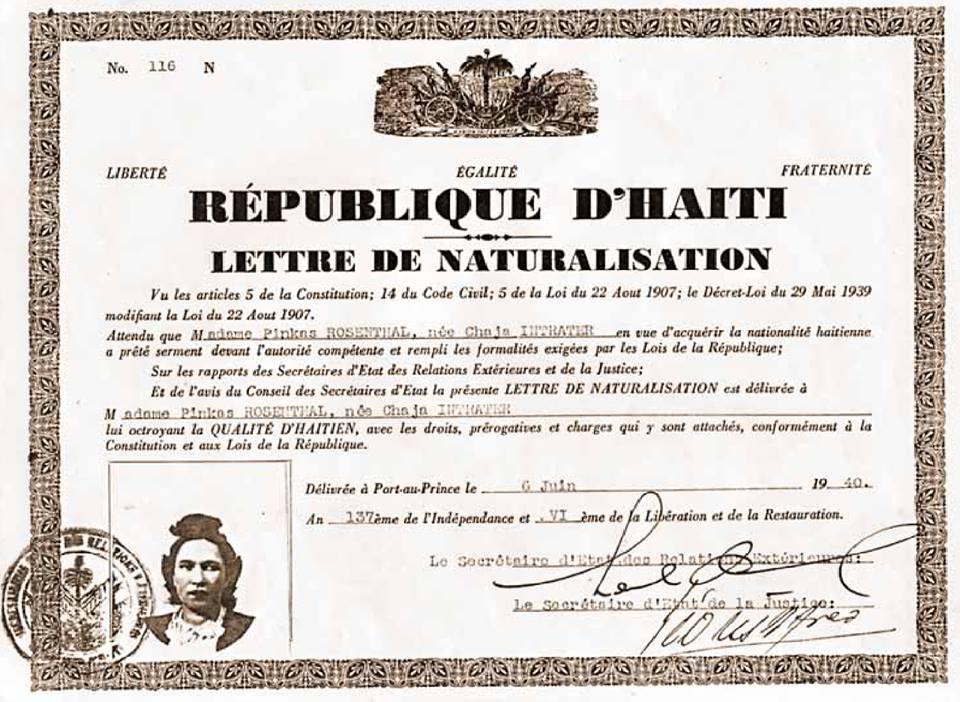
Dès l'arrivée d'Adolf Hitler à la tête de l'Allemagne, la majorité des intellectuels haïtiens, parmi lesquels Dantès Bellegarde et Jacques Roumain, condamnèrent le nazisme. L'État haïtien ne se contenta pas de désavouer l'Allemagne, mais définit des lignes d'actions beaucoup plus concrètes face au péril affronté par les Juifs.

En vue de faciliter leur immigration, le gouvernement haïtien accepta ces Juifs comme réfugiés politiques, puis les fit naturaliser dans les consulats haïtiens en vertu d'un décret-loi de naturalisation. Donc, Haïti, ce pays aujourd'hui très appauvri, était encore au temps de son prestige, et elle pouvait rester dans son rôle de terre de liberté et de libération. Un temps qui manque bien aux Haïtiens.

Sténio Vincent, alors président d'Haïti, a publié son décret spécial, adopté en vertu d'une habilitation législative le 29 mai 1939, octroyant la nationalité par contumace et la citoyenneté haïtienne in absentia aux réfugiés juifs d'Haïti. Il proposa d'établir un refuge pour 50 000 d'entre eux en Haïti, pour qu'ils s'échappent de l'Europe, notamment de l'Allemagne nazie.


L'État haïtien avait même proposé de mettre à la disposition des Juifs l'Île de la Gonâve (689,62 km2), à peine moins grande que l'île de la Martinique (1 128 km2). Mais le secrétaire d'État américain d'alors s'y opposa. Il se disait même prêt à accueillir un peu plus de Juifs allemands: mais le secrétaire d'État américain Cordell Hull, prix Nobel de la paix en 1945, ne voulut pas en entendre parler, pour des raisons qui restent encore aujourd'hui mystérieuses.

Les documents historiques sont désormais accessibles. Pour apprendre plus sur le sujet, je vous recommande le livre du docteur Joseph Junior Bernard, ce travailleur infatigable, passionné des relations d'Haïti avec les autres nations. Il avait pris le temps de faire paraître sous les presses de l'imprimerie Deschamps son essai intitulé «Histoire juive d'Haïti», au mois d'avril 2013.

Aussi, il y a ce recueil de textes d'étudiants juifs montréalais et haïtiens titré «L'un pour l'autre», écrit au lendemain du tremblement de terre dévastateur de 2010. Il rend hommage à ces deux peuples qui, chacun à sa façon, ont fait preuve d'humanité.

Il a été publié sous la direction de Maurice Chalom, par Les Éditions du CIDIHCA (Centre International de Documentation et d'Information Haïtienne Caribéenne et Afro-canadienne) situé au Québec et dirigé par Frantz Voltaire, en collaboration avec la Ville de Montréal, le gouvernement du Canada et le Conseil des Arts du Canada.

Crédits image: CIDIHCA. Et Informations: Frantz Voltaire, Roland Paret, Dr. Joseph Junior Bernard, Radio Canada International RCI

Auteur:Thélyson Orélien


Crédits image: CIDIHCA. Et Informations: Frantz Voltaire, Roland Paret, Dr. Joseph Junior Bernard, Radio Canada International RCI

http://quebec.huffingtonpost.ca/thelyson-orelien/une-histoire-haitienne--75e-du-decret-loi-de-lannee-1939_b_5429645.html


Billets de l'auteur : Thélyson Orélien
 
  Blogueur au Huffington Post Québec


Monday, December 10, 2012

Polish 🇵🇱 Descendants in Haiti 🇭🇹

200 Years Away From Home
🇵🇱  Polish Descendants in Haiti  🇭🇹
Mme and Monsieur Druillard. They live in Cazales alone, occasionally visited by children and grandchildren, scattered around Haiti and beyond. They are one of the last pale skin couples left.

When the French Revolution changes started to appear in St Domingue, (former name of Haiti, at that time French colony) , in 1792, Léger-Félicité Sonthonax was sent to the colony by the French Legislative Assembly as part of the Revolutionary Commission. His main goal was to maintain French control of Saint-Domingue, stabilize the colony, and enforce the social equality recently granted to free people of color by the National Convention of France.
*
*
On August 29, 1793, Sonthonax took the radical step of proclaiming the freedom of the slaves in the north province (with severe limits on their freedom). In September and October, emancipation was extended throughout the colony. On February 4, 1794 the French National Convention ratified this act, applying it to all French colonies.

However, not only white plantation owners but also mixed mulattoes and free men of colour, that were to build future elites of independent state, were opposed to abolition of slavery and fought the French force. Finally, slaves under Toussaint L'Ouverture managed to take control of the whole Hispaniola island and slavery was abolished in 1801.

In the meantime continental France was already ruled by Napoleon, and in 1802 he sent a massive invasion force under his brother-in-law Charles Leclerc in order to take over the island and restore slavery when possible.

The contingent was around 40000 strong and included Polish Legion, army created according to the wishful thinking of Polish soldiers that by helping Napoleon in his wars, freedom will be won for Poland. The slogan of the time was "For yours and our freedom". However, when the Legionnaires realized that the campaign has very little to do with liberating and is actually about enslaving people fighting for their rights, they refused, deserted and in many cases joined the slave army.

The invading army perished anyway due to yellow fever and malaria, and at the same time war resumed between France and Britain, so Napoleon was forced to sell his overseas possessions to USA in Louisiana Purchase.

On January 1, 1804 independent Haiti was declared, remaining colonizers who didn't manage to flee were slaughtered and white people prohibited from possessing property in Haitian soil.

One exception were Polish soldiers, in gratitude for their actions during the war of independence they were allowed to stay and were spared the fate of other whites, which some of them choose , settling in places like Fond des Blanc or Cazales. In isolation for a long time, memory of old traditions and language started to die out, but there is still awareness of their heritage, of being different. This is portrait of Cazales, biggest of those villages, name , as locals believe , originating from popular Polish name Zalewski and creole word Kay. The home of Zalewski, the home of the Polish descendants.

This photo has notes. Move your mouse over the photo to see them.


Piel Dolis is supporting Brasil, but as many Haitians from this village is living in Caracas, Venezuela, working for himself and the family left behind in Cazales. This is last day of his holiday, tomorrow he is going to Port Au Prince to catch a plane to Caracas.

Straight hair, light skin, moustache and machete replacing a sabre are reminding of old Polish soldiers from Napoleonic times.

Delice Joseph Merlo. Carpenter by trade, working occasionally once 3-4 months. 6 daughters, his wife now in the last month of next pregnancy. They are all living in 3 tiny rooms in the house he built himself. During part of our stay in Cazales he was our host and guide. Sharing life of this family for a few days we had a chance to see time expanding like a bubble gum. There is absolutely nothing significant happening, people wake up, drink some coffee, wash clothes in the river, sit on old bench, talk , sleep , walk, sit down again, go to see their neighbours, come back, play dominoes, go to have a swim in the river, work in the garden perhaps an hour a day. Eternal holidays with no alternative, no ideas what to do with time, no initiative, just waiting for the day to end. This is how large part of Haitian men in the countryside live, and it strangely reminds of rural , post-communist Poland with same kind of attitudes.

Saintelo Desmisslan ( born 1950) and Florvil Inome in the background. Saintelo is a farmer who spends most of his time between some of his fields and various village corners, where he sits shirtless and counts time going by. The way in he asked us for money any time he saw us made me more tolerant for constant Haitian "give me dollar" I heard travelling in this country. After all, in other cases it was just a skin colour that separates them from ordinary village bum one can meet in rural Poland, asking money for cheap wine. In case of Saintelo even colour was the same.

Sylvain Benoit. He is one of very few rich citizens of Cazales. Having lived years in the USA he now owns huge garden , but even if it brings considerable income, his main source of cash is still pension from America. The garden is very well fenced and protected by aggressive dogs, Sylvain is also one of few car owners in the village. His daughter was in Poland once, from where she brought an icon of Black Madonna from Czestochowa as a gift for local catholic priest. She was also a former wife of Haitian president Preval and is said to have misappropriated most of 5 million USD that was donated for infrastructure in this "Polish" village by foreign donors. For this money only tin roof over local market was erected and small place near the village catholic church renovated and named John Paul II square.

Polish-Haitian Connection Part 2: Voodoo, Erzulie Dantor and the Black Madonna
Black Madonna of Częstochowa
The chromolithograph is commonly used in Haiti to depict the Loa Erzulie Dantor
 Haitian Voodoo is mostly derived from a religious system of deity and ancestor veneration widely practiced in western Africa at the time of the Atlantic slave trade. Haitian Voodoo has extra ("New World") spirits which do not exist in African voodoo. People who ended up as slaves on the Caribbean islands controlled by the Kingdom of France were forbidden (at first on an ad-hoc basis, later by the Code Noir) from practicing any religion other than Catholicism.

In light of all this a process of syncretisation took place on Haiti (or Saint-Domingue as the territory was then called) where some voodoo loa (spirits) became identified with Catholic saints and some Catholic saints became loa in their own right. It's a fascinating subject, an introduction to which should be related by those more talented than I. BoB particularly recommends Webster University professor Bob Corbett's site in this regard.

A particular syncretisation spurred me into writing about Voodoo - that between the Black Madonna of Czestochowa (Polish: Czarna Madonna Częstochowska) and the New World loa Erzulie Dantor. This is the loa of single mothers, homosexuals, justice and independence. Dantor was present at a famous voodoo ritual in 1791, where she took over the body of one of the worshippers and urged Haitians to "kill the stranger" - this precipitated the revolution which culminated in independence for the island in 1804 and the massacre of every Frenchman on the island.

For her part the Black Madonna has a special place in Polish national myth. The painting is housed in Poland's holiest monastery at Jasna Góra. Legend has it that the icon was painted by St. Luke on a tabletop belonging to Mary and Joseph and eventually brought to Poland. Her distinctive facial scars are said to have miraculously reappeared after they had been painted over following a pagan attack, an indication that the Black Madonna wanted to share in the nation's fate.

Revolutionary Haitians were not to know all of these details. The back story to the painting in Voodoo lore is of a mother fiercely protective of the daughter she carries (actually Jesus in the Catholic interpretation). She loves knives and received the facial scars fighting with her sister Erzulie Freda. The scars are a sign of Dantor's strength - she is wounded but keeps going.

It is hard to say why this particular religious painting became a popular focus for syncretisation with a "New World" spirit of Haitian Voodoo. Her black skin may have made the painting more acceptable to a black population than other white-skinned versions, much as images of saints with explicitly Black African features are popular in Africa. It is also possible that there were many more copies of this particular painting on the island than others, following the landing of 5000 Polish legionaries on the island in 1802. Many Poles to this day keep depictions of the Black Madonna in their homes, cars and wallets.
*
*
🇵🇱  🇭🇹 🇵🇱  🇭🇹  🇵🇱  🇭🇹  🇵🇱  🇭🇹

Tuesday, October 2, 2012

Age of Empire & Royalty III 👑 FS (1782–1867)

Age of Empire & Royalty III
 Faustin-Élie Soulouque
26 August 1849 - 15 January 1859
Faustin 1er  Emperor of Haiti

Faustin I (1782–1867) was born Petit-Goâve in 1782 as Faustin-Élie Soulouque. He was a career officer and general in the Haïtian army when he was elected President of Haïti in 1847. 

In 1849 he was proclaimed Emperor of Haïti under the name of Faustin I. He soon purged the army of the ruling elite, installed black-skinned loyalists in administrative positions, and created a secret police and a personal army. 
In 1849 he created a black nobility.

However, his unsuccessful attempts to reconquer the Dominican Republic undermined his control and a conspiracy led by General Fabre Nicolas Geffrard forced him to abdicate in 1859.

He was freed by Léger-Félicité Sonthonax in 1793.
As a free citizen he enlisted in the black revolutionary army and fought as a private during the Haïtian Revolution between 1803–1804. During the conflict Soulouque became a respected soldier and as a consequence in 1806 he was commissioned as a Lieutenant in the Army of Haïti and made Aide de Camp to General Lamarre. In 1810 he was appointed to the Horse Guards under President Pétion. During the next four decades he continued to serve in the Haïtian Military, rising to the rank of Colonel under President Guerrier, until finally promoted to the highest command in the Haïtian Army, attaining the rank of Lieutenant General and Supreme Commander of the Presidential Guards under then President Jean-Baptiste Riché.

Reign:
In 1847 President Riché died. During his tenure he had acted as a figurehead for the Boyerist ruling class, who immediately began to look for a replacement. Their attention quickly focused on Faustin Soulouque, whom the majority considered to be a somewhat dull and ignorant man. At the age of 65 he seemed to be a malleable candidate and was subsequently enticed to accept the role offered him, taking the Presidential Oath of Office on 2 March 1847.
At first Faustin seemed to fill the role of puppet well. Within a short time however, he overthrew his backers and made himself absolute ruler of the state. Supported by a gang of highly loyal militia known as "zinglins", Soulouque continued to consolidate his power over the government, a process which culminated in the Senate and Chamber of Deputies proclaiming him Emperor of Haïti on 26 August 1849. His reign was marked by a violent restrictions towards opposition and numerous murders. 
In December 1849 Faustin married his long time companion Adélina Leveque. 
On 18 April 1852 at the capital Port-au-Prince, 
both emperor and empress were crowned in an immense and lavish ceremony, in emulation of the coronation of the French Emperor Napoleon Bonaparte.
During his subsequent reign, Faustin attempted to create a strong centralized government, which while retaining a profoundly Haïtian character, borrowed heavily from European traditions, especially those of the First French Empire. 

One of his first acts after being declared emperor was to establish a Haitian nobility.  By September, 1850, Faustin had granted Letters Patent creating 4 Princes of the Empire, 59 Dukes, 2 Marquis, 99 Counts, 215 Barons, and scores of Hereditary Chevaliers and lesser nobles.  

In order that he might reward loyalty to his regime as well as add to the prestige of the Haitian Monarchy, on 21 September 1849 he established the Military Order of St Faustin and the Civil Order of the Haïtian Legion of Honor. Later, in 1856 he created the Orders of St. Mary Magdalene and the Order of St. Anne. That same year he founded the Imperial Academy of Arts.
Faustin's foreign policy was centered on preventing foreign intrusion into Haïtian politics and sovereignty. The independence of the Dominican Republic (then called Santo Domingo) during the Dominican War of Independence from Haïti was, in his view, a direct threat to that security. Faustin launched successive invasions into Dominican territory, in 1849, 1850, 1855 and 1856, each with the objective of seizing the eastern half of the island and annexing it to Haïti. However, all of the attempts ended in defeat for the Haïtian Army.

During his reign, Faustin also found himself in direct confrontation with the United States over Navassa Island which the U.S. had seized on the somewhat dubious grounds that guano had been discovered there. Faustin dispatched warships to the island in response to the incursion, but withdrew them after the U.S. guaranteed Haïti a portion of the revenues from the mining operations.

Faustin's marriage to Empress Adélina produced one daughter, Princess Célita Soulouque.   The emperor also adopted Adelina's daughter, Olive, in 1850. She was granted the title of Princess with the style Her Serene Highness. She married Jean Philippe Lubin, Count of Petion-Ville. The emperor had one brother, Prince Jean-Joseph Soulouque, who in turn had eleven sons and daughters. Jean-Joseph's eldest son, Prince Mainville-Joseph Soulouque, was created Prince Imperial of Haïti and heir apparent upon the succession of his uncle to the throne, he later married Marie d'Albert.
Adélina Soulouque, née Leveque, Empress Consort of Haiti, was the daughter of Marie Michel Lévêque, a Haitian of mixed-race heritage. She had a long-term relationship with Faustin Souloque for many years before the marriage ceremony. In December 1849, Adelina married emperor Faustin, she was given the title of Empress of Haiti with the style of Her Imperial Majesty, and crowned with her husband at the capital Port-au-Prince 18th April 1852. Her sister was styled H.S.H. Princess Clélia.
Exile and death
In 1858 a revolution began, led by General Fabre Geffrard, Duc de Tabara.  Geffrard defeated the Imperial Army and seized control of most of the country. As a result the emperor abdicated his throne on 15 January 1859. Refused aid by the French Legation, Faustin was taken into exile aboard a British warship on 22 January 1859. Soon afterwards, the emperor and his family arrived in Kingston, Jamaica, where they remained for several years. 

Allowed to return to Haïti, Faustin died at Petit-Goâve on 6 August 1867 and was buried at Fort Soulouque.
 

Friday, September 21, 2012

Citadelle Laferrière

Citadelle Laferrière

The hilltop fortress of  King Henri I, built at the time of his rule in 1811 as a citadel housing 10,000 soldiers.  

Henri was one was one of four key generals to liberate Haiti from the French during the Haitian Revolution.

Haiti Citadelle Louis Mercier Video

The Citadelle Laferrière or, Citadelle Henri Christophe, is a large mountaintop fortress located in northern Haiti, approximately 17 miles (27 km) south of the city of Cap-Haïtien and five miles (8 km) uphill from the town of Milot.
It is the largest fortress in the Americas and was designated by the United Nations Educational, Scientific and Cultural Organization (UNESCO) as a World Heritage Site in 1982—along with the nearby Sans-Souci Palace.

The massive stone structure was built by up to 20,000 workers between 1805 and 1820 as part of a system of fortifications designed to keep the newly-independent nation of Haiti safe from French incursions. The Citadel was built several miles inland, and atop the 3,000 ft (910 m) Bonnet a L’Eveque mountain, to deter attacks and to provide a lookout into the nearby valleys. Cap-Haïtien and the adjoining Atlantic Ocean are visible from the roof of the fortress. Anecdotally, it is possible to sight the eastern coast of Cuba, some 90 miles (140 km) to the west, on clear days.

The Haitians outfitted the fortress with 365 cannon of varying size. Enormous stockpiles of cannonballs still sit in pyramidal stacks at the base of the fortress walls. Since its construction, the fortress has withstood numerous earthquakes, though a French attack never came.

Henri Christophe initially commissioned the fortress in 1805. At the time, Christophe was a general in the Haitian army and chief administrator of the country's northern regions. In 1806, along with co-conspirator Alexandre Pétion, Christophe launched a coup against Haiti's emperor, Jean-Jacques Dessalines. Dessalines's death led to a power struggle between Christophe and Pétion, which ended with Haiti divided into northern and southern compartments, with the north under Christophe's presidency by 1807. He declared himself king in 1811.
*
*
The Citadel was part of a system of fortifications that included Fort Jacques and Fort Alexandre, built on the mountains overlooking Port-au-Prince. Dessalines ordered those forts built in 1805 to protect the new nation against French attacks.
In the event of an invasion, Christophe planned to have his military burn the valuable crops and food stocks along the coast, then retreat to the fortress, setting ambushes along the sole mountain path leading to the Citadel.

Christophe suffered a stroke in 1820, and some of his troops mutinied. Shortly afterwards, he committed suicide, according to legend, by shooting himself with a silver bullet. Loyal followers covered his body in quicklime and entombed it in one of the Citadel's interior courtyards to prevent others from mutilating the corpse.
The walls of the fortress itself rise up 130 feet (40 m) from the mountaintop, and the entire complex, including cannonball stocks, yet excluding the surrounding grounds, covers an area of 108,000 square feet (10,000 m2). The large foundation stones of the fortress were laid directly into the stone of the mountaintop and fastened using a mortar mixture which included quicklime, molasses, and the blood of local cows and goats.

Large cisterns and storehouses in the fortress's interior were designed to store enough food and water for 5,000 defenders for up to one year. The fortress included palace quarters for the king and his family, in the event that they needed to take refuge within its walls. Other facilities included dungeons, bathing quarters, and bakery ovens. The Citadel's appearance from the trail leading up to its base has been likened to the prow of a great stone ship, jutting out from the mountainside. The structure is angular, and assumes different geometric forms based on the viewer's orientation. Though most of the fortress has no roof as such (the interior top is a latticework of stone walkways), some slanted portions are adorned with bright red tiles. The fortress has been repaired and refurbished several times since its construction, including in the 1980s with help from UNESCO and the World Monuments Fund, though little of it has been replaced, and its design remains the same.

Visitors are encouraged to rent a horse for the uphill trek. The first portion of the seven-mile (11 km) trail is navigable by 4WD vehicle. The entire seven-mile-trail starting in Milot, almost completely uphill, can be walked by experienced hikers who carry plenty of water. Most of the interior of the Citadel fortress itself is accessible to visitors, who may also climb the numerous staircases to the fortress's roof, which is free of guardrails. On a clear day, the city of Cap Haitien and the Atlantic Ocean can be seen to the north.


yflec11h   See it on GOOGLE   yflec11b